


Anyone who knows me will likely think that the answer to this question is ‘dog’. I’m that sort of person who will see a dog out for a walk and approach the owner to say how adorable it is, and whether or not I can get a pat. Most people are obliging and I get to give a good doggo some love – and sometimes, I even get puppy kisses!
However, dogs aren’t my favourite animal. They’d be my top choice for a pet, if I was allowed to have one where I rent, but I wouldn’t say they’re my favourite. It’s an animal I care about very deeply, and support with all my heart – to the extent that I even have one tattooed on my arm, and I’ll never let slip the opportunity to talk about them and their plight in an aim to raise awareness.

What is it? Why, my favourite animal is a type of cat.
A very large type of cat. In fact, it’s the largest cat on earth.
Panthea Tigris.
The tiger.
These big cats are agile and flexible, with everything that one would expect of a cat: retractable claws, sharp teeth, keen senses for hunting and strong limbs for climbing and jumping. Their trademark reddish-orange coat with dark markings allow them to blend in easily when stalking their prey, despite their size. They are not small animals; as stated above, they are the biggest type of cat in the world, though sizing does differ in subspecies.
There are six subspecies of tiger that are alive today: the Siberian, The Southern China Tiger, the Indochinese Tiger, the Malayan tiger, the Sumatran and the Bengal tiger. Tigers generally make their home in dry and wet areas, favouring rainforests, wetlands, mangroves and grasslands all across Asia. India, according to the Save the Tigers fund, is home to the largest population of tigers, with approximately 2,500 – 3,750 tigers calling it their home.
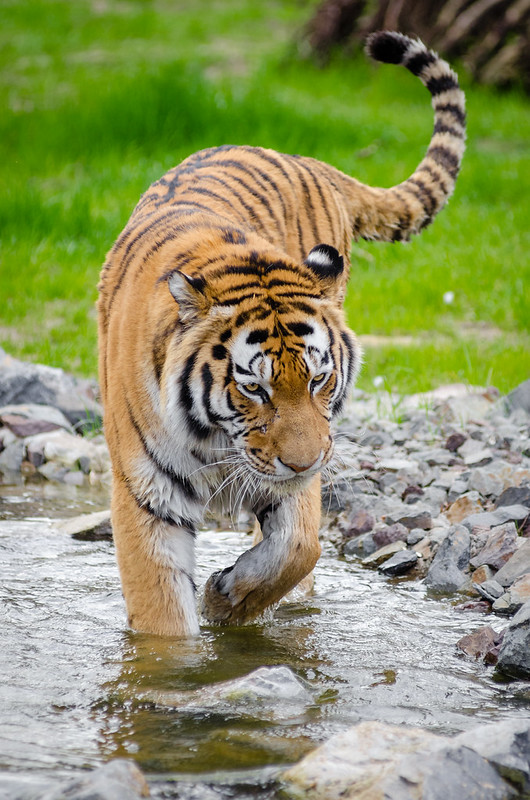
Tigers, unlike lions, tend to be solo animals; opting to live and hunt alone rather than be part of a pack. Males, especially, are territorial; females may, at times, have overlapping territories but males do not. Unlike housecats, tigers are unable to purr, but they can – and do! – roar. Female tigers will typically have 2 to 5 cubs per litter. Tiger cubs tend to stay with their mother until they’re about 15 to 18 months old, before striking out on their own and finding their own territory.
Tigers are amazing and beautiful creatures – but they’re in danger.
According to the IUCN (International Union for Conservation of Nature), tigers on the whole are an endangered species. According to the World Wildlife Fund (WWF), the numbers of tigers have fallen by about 95% in the last century and occupy approximately 40% less than the area they occupied a decade ago.
It’s estimated that there are only about 4,500 tigers in the wild worldwide. Sumatran tigers, especially, are considered to be critically endangered with an approximate number of only 600 remaining in the wild.
Why?
The significant decline of tigers can be mostly attributed to poachers. These people kill the beautiful, powerful creatures for their pelt – used for so-called luxury items such as rugs – and for their bones, which are said to be used in some traditional Asian medicines. Habitat loss also plays a role in the declining numbers; human population and expansion resulting in deforestation and logging can destroy tiger habitats.
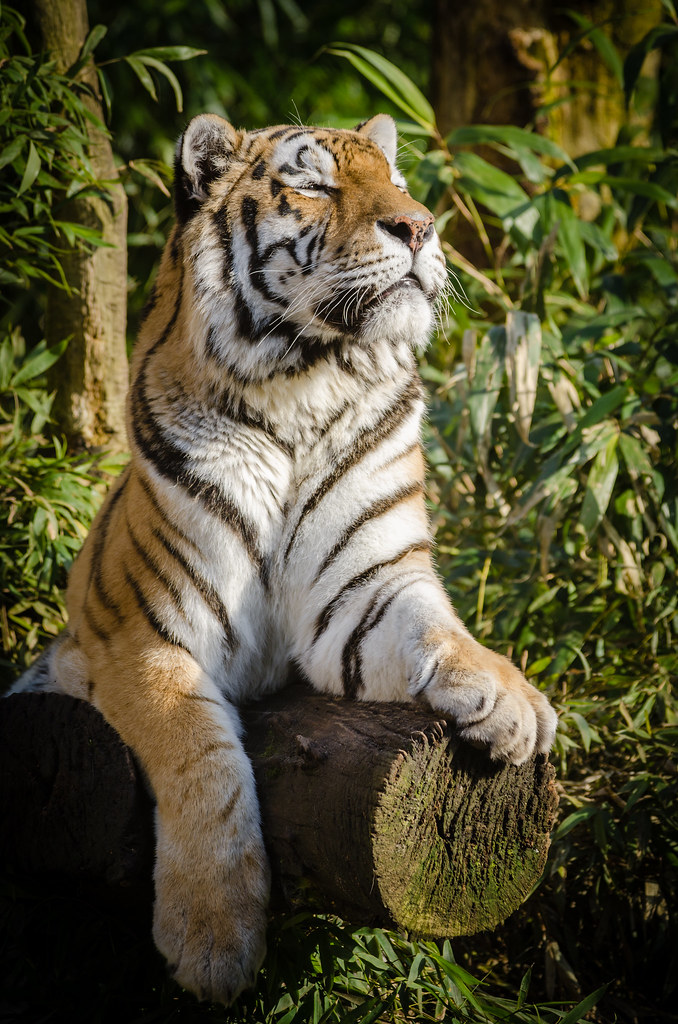
It’s not just in the wild that tigers are dying, though; some tigers are used and abused by humans for entertainment purposes such as in circuses and even kept as pets in some instances. In the wild, the average lifespan of a tiger is somewhere between 10 to 15 years, but those living in captivity do not reach such ages due to the cramped and inhumane conditions.
There are many conservation projects out there dedicated to saving the tiger and their habitats. I, myself, have donated to them many times in the past, including ‘adopting’ a tiger through WWF.
Tigers, like all animals, contribute to the ecosystem and deserve to thrive and survive.


Leave a Reply